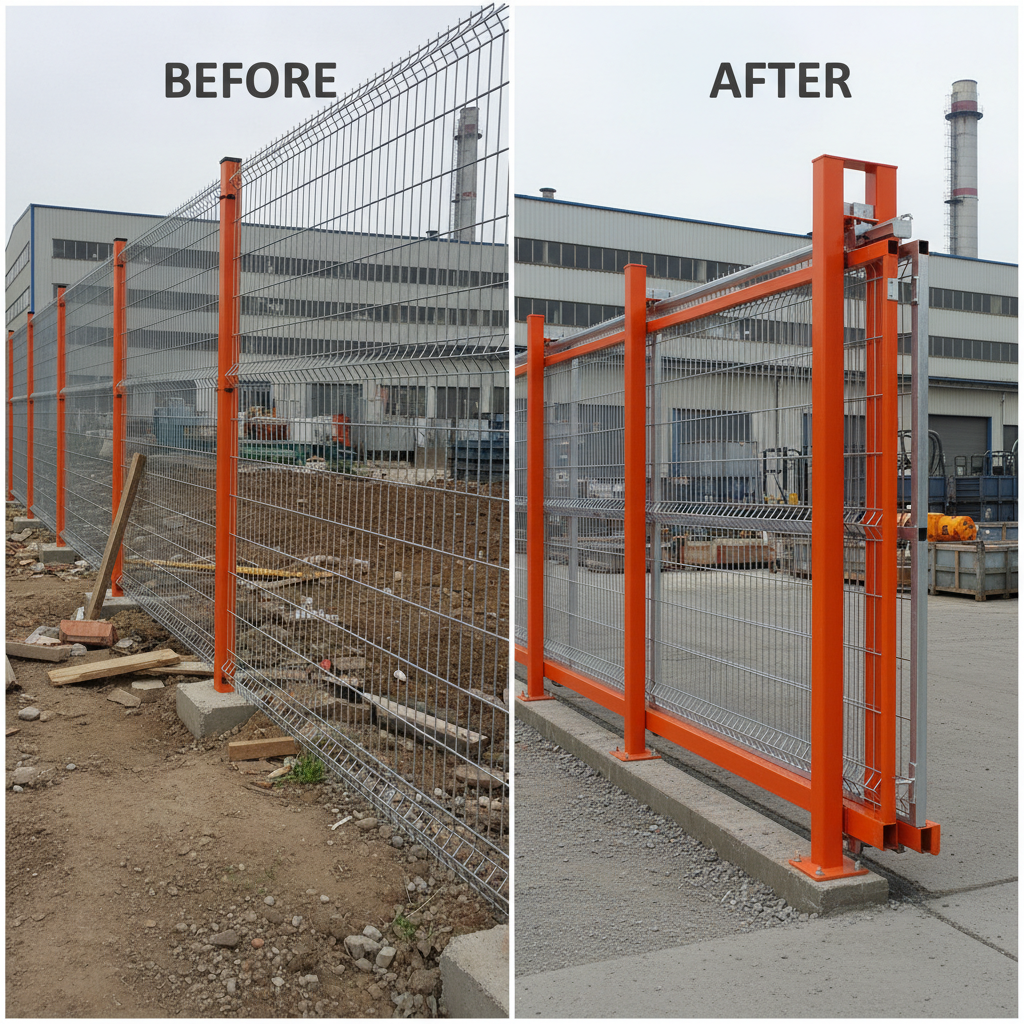
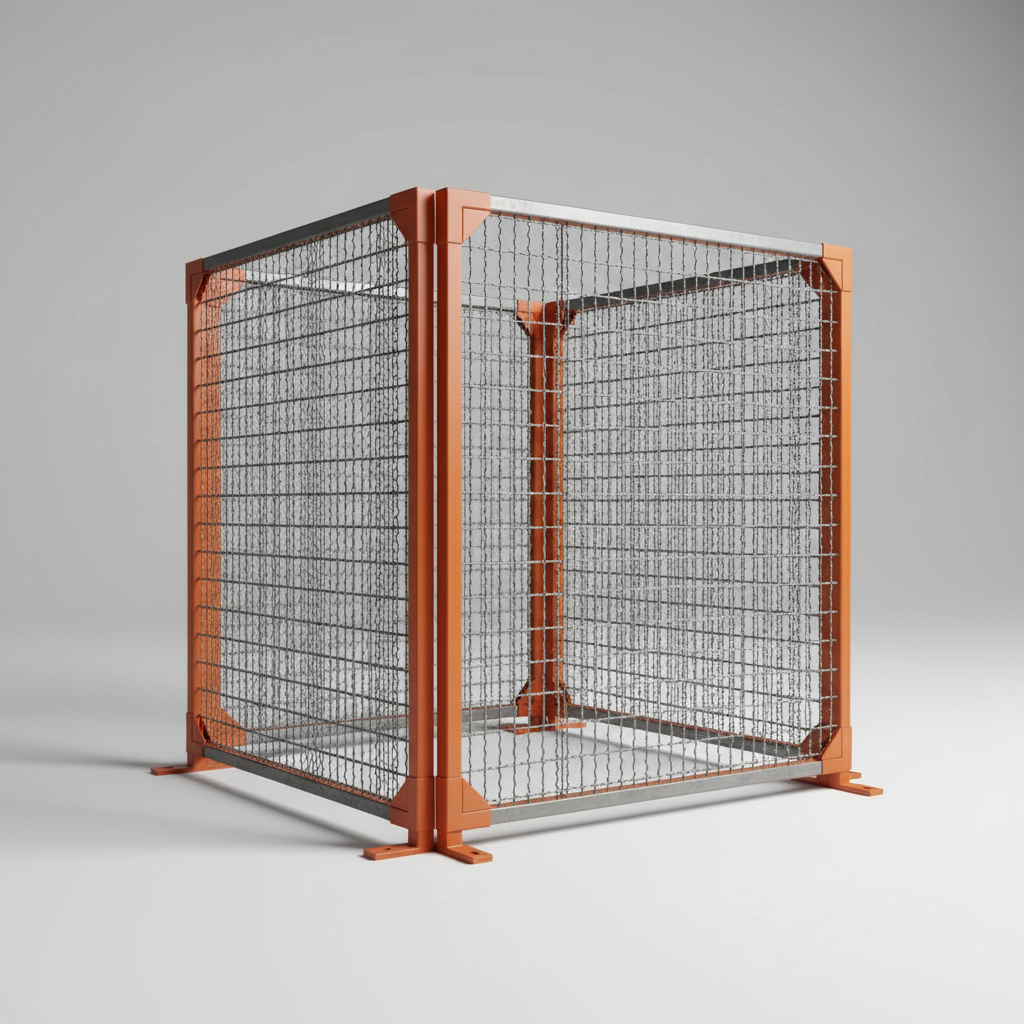
Securing agricultural boundaries requires a strategic balance between structural rigidity and cost-effectiveness. For large-scale land management, the choice of fencing is rarely about the cheapest material, but rather the lowest total cost of ownership over a decade of exposure to the elements.
Modern agricultural requirements have shifted from simple livestock containment to integrated security systems that prioritize durability and low maintenance. This evolution has placed a higher premium on the manufacturing processes—such as galvanization and powder coating—that prevent premature corrosion in humid or saline environments.
When evaluating a farm fence manufacturer, buyers must look beyond a product catalog and analyze the technical infrastructure behind the production line to ensure long-term boundary integrity.


The foundation of a reliable agricultural perimeter lies in the metallurgical properties of the wire. Standard mild steel is insufficient for outdoor exposure; instead, high-tensile steel combined with specialized surface treatments is the industry standard. Zinc-rich galvanization creates a sacrificial anode layer that protects the core steel from oxidation.
Beyond basic coatings, the introduction of PVC and powder coating lines has allowed manufacturers to tailor fences to specific environmental stressors. For instance, a 270-meter powder coating line ensures a uniform application of protective polymers, which is critical for maintaining aesthetic and structural integrity in coastal or high-humidity regions.
Longevity is primarily determined by the pre-treatment process. Before any coating is applied, the steel must undergo a rigorous cleaning and chemical priming phase. This ensures that the bond between the metal substrate and the protective layer is molecularly secure, preventing the "peeling" effect often seen in low-quality installations.
Welding technology also plays a pivotal role. Automated welding systems provide consistent joint strength, reducing the risk of structural failure at the intersections of the wire. In high-stress environments, such as livestock containment, the ability of the fence to absorb impact without permanent deformation depends on the precision of these welds and the gauge of the wire used.
Quality control is the final safeguard. An integrated inspection department must verify dimensions, coating thickness, and weld stability before shipping. This systematic approach transforms a simple metal product into an engineered solution capable of withstanding temperature fluctuations from -35℃ to 70℃.
While security is the primary goal, visual privacy is increasingly demanded in residential-adjacent farm zones. Integrating privacy slats into existing chain link structures allows for a modular upgrade without the need for complete fence replacement.
Effective privacy solutions must balance wind resistance with visual occlusion. Slats that are too dense can turn a fence into a "sail," increasing the risk of structural collapse during high-wind events.
From a technical standpoint, the use of export-grade materials ensures that slats remain stable and UV-resistant. By offering customizable widths (44mm to 49mm) and heights, manufacturers can optimize the ratio between airflow and privacy, ensuring the fence remains functional and durable.
Different fencing systems are engineered for specific failure modes. For example, a 358 Anti-Climb Fence is designed specifically to eliminate footholds and finger-holds, making it ideal for high-security zones. In contrast, 3D Wire Fences offer a balance of visibility and rigidity, suitable for general perimeter marking.
The selection process usually involves weighing the required security level against the budget and environmental constraints. Chain link fences offer versatility and cost-efficiency, whereas double wire fences provide superior impact resistance.
In a typical industrial agricultural setting, a hybrid approach is often most effective. For example, high-security assets like fuel depots or chemical storage should be enclosed with 358 Anti-Climb systems, while the outer pasture boundaries can utilize galvanized chain link or double wire fencing.
Buyer concerns often center on the "hidden costs" of installation. Choosing a manufacturer that provides comprehensive accessories—including matching posts and gates—reduces the risk of component incompatibility, which can compromise the overall structural integrity of the boundary.
The industry is moving toward "smart boundaries," where physical fencing is integrated with sensor technology. While the fence remains a physical deterrent, its role is evolving into a platform for electronic surveillance. This requires fences to have higher structural stability to support the weight of sensors and cameras without sagging.
Sustainability is also becoming a procurement driver. There is a growing demand for coatings that are VOC-compliant and manufacturing processes that reduce steel waste. The shift toward more durable, longer-lasting coatings reduces the frequency of replacement, thereby lowering the long-term environmental footprint.
As global supply chains fluctuate, the ability of a manufacturer to maintain consistent quality through state-of-the-art welding and coating technology is becoming a critical competitive advantage, ensuring that large-scale projects are not delayed by subpar materials.
When selecting a partner, the evaluation should focus on the manufacturer's vertical integration. A company that controls the process from raw steel treatment to the final powder coating line can offer better quality consistency than an assembler who outsources these critical steps.
Trade-offs are inevitable. High-security fences like the anti-climb series offer maximum protection but at a higher cost and installation complexity. Chain link is fast to deploy but requires more frequent tensioning over time.
The following framework provides a comparative look at selection factors based on specific agricultural and commercial needs.
| Requirement | Chain Link | 3D Wire | Anti-Climb | Double Wire |
|---|---|---|---|---|
| Installation Speed | High | Medium | Low | Medium |
| Intrusion Resistance | Low | Medium | Very High | High |
| Wind Permeability | Very High | High | Medium | High |
| Cost Efficiency | Very High | High | Low | Medium |
| Maintenance Need | Medium | Low | Very Low | Low |
| Typical Use Case | Livestock | Garden/Park | Critical Infra | Industrial |
Galvanization is a chemical process where steel is coated in zinc to prevent rust via sacrificial protection. Powder coating is a dry powder applied electrostatically and then cured under heat to create a hard, colorful polymer skin. For maximum durability, many manufacturers use a "duplex system" where powder coating is applied over a galvanized base, providing both chemical corrosion resistance and a robust physical barrier.
Selection depends on the desired balance between airflow and occlusion. Narrower slats (e.g., 44mm) allow more wind to pass through, reducing the stress on the fence posts during storms. Wider slats provide more visual privacy. You should also match the height of the slat to the specific mesh aperture of your chain link fence to ensure a snug fit and prevent slats from sliding or rattling.
For general livestock containment, yes, it is typically unnecessary. However, for areas containing expensive machinery, high-value livestock, or sensitive agricultural chemicals, the 358 Anti-Climb system is an investment in risk mitigation. It eliminates the gaps that intruders use to climb, significantly reducing the likelihood of unauthorized entry compared to standard wire mesh.
Focus on the pre-treatment and coating infrastructure. Ask about the length of their powder coating line (e.g., 270m) and their pre-treatment processes. A manufacturer with dedicated inspection personnel and state-of-the-art welding technology is more likely to deliver a product that meets international export standards and withstands extreme temperature ranges from -35℃ to 70℃.
A lower gauge (thicker wire) increases the initial material cost but significantly extends the fence's lifespan by providing higher impact resistance and a larger volume of sacrificial zinc for galvanization. In high-traffic agricultural areas, using a heavier gauge is more cost-effective over a 10-year period because it reduces the frequency of repairs and complete replacements.
Yes, as long as the existing fence is structurally sound. However, you must evaluate the integrity of the posts first. Adding slats increases the wind load on the structure. If the old posts are corroded or leaning, the additional wind pressure from the slats could lead to fence failure. We recommend inspecting the tension of the wire before inserting new slats.
Selecting the right fencing system is a technical decision that directly impacts the security and operational efficiency of an agricultural enterprise. By focusing on metallurgical quality, coating consistency, and a strategic match between fence type and application, land managers can avoid the costly cycle of frequent replacements.
Whether the goal is simple containment or high-security protection, partnering with a manufacturer that integrates advanced welding and coating technologies ensures that the physical boundary remains a reliable asset for decades.