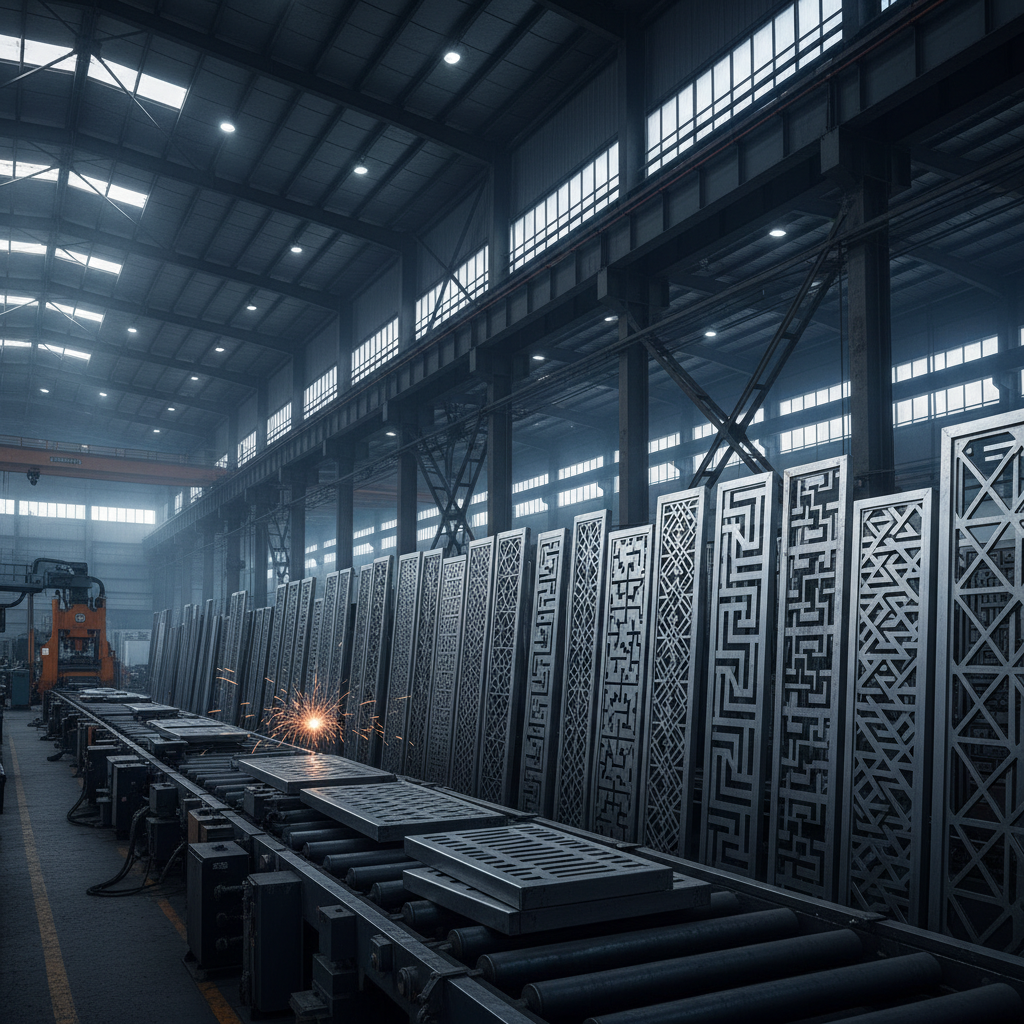
A custom fence panels factory specializes in the engineering and manufacturing of bespoke metal perimeter solutions tailored to specific security, aesthetic, and structural requirements. Unlike off-the-shelf options, these factories integrate precision welding and advanced coating technologies to produce panels that fit unique dimensions and environment-specific challenges.
For procurement officers and site managers, selecting a custom manufacturer is often a response to the limitations of standard fencing, such as inadequate height, insufficient anti-climb capabilities, or poor corrosion resistance in coastal areas. The ability to specify materials and finishes ensures that the final installation balances long-term durability with the immediate operational needs of the site.
This technical analysis explores the critical factors in selecting a custom fence panels factory, examining the production workflows, material selection, and implementation strategies that ensure high-performance security boundaries for industrial and commercial applications.

1Engineering Fundamentals of Custom Fence Production

The core of a custom fence panels factory lies in its ability to translate blueprints into physical security assets. This process begins with structural calculation, where engineers determine the wire gauge and mesh aperture based on the intended load and security level. Precision welding is then applied to ensure joint integrity, which is critical for preventing panel deformation under pressure.
Surface treatment is another pillar of the production process. Utilizing advanced powder coating lines and PVC coating options, factories can protect the steel core from oxidation. This is particularly vital for installations in high-humidity or salt-heavy environments where standard galvanization may fail prematurely.
By integrating these engineering steps, factories provide a level of structural reliability that generic products cannot match. From the initial design phase to the final quality inspection, every panel is verified against the client's specific tolerance levels, ensuring a seamless installation on-site.
2Key Technical Specifications for High-Security Panels
High-security fencing requires a strict adherence to material standards. Common specifications include the use of high-tensile steel and specialized coatings. For instance, 358 anti-climb panels utilize a very tight mesh that is nearly impossible to grip or cut with standard hand tools, making them essential for critical infrastructure.
The structural integrity is also defined by the post-and-panel connection system. Custom factories often engineer specialized brackets and clamps that provide maximum rigidity while allowing for minor thermal expansion, preventing the panels from buckling during extreme temperature shifts.
Furthermore, the thickness of the zinc layer in galvanized options is a primary indicator of lifespan. A factory capable of controlling this layer precisely can offer warranties that match the project's lifecycle, reducing the total cost of ownership over decades of service.
3Application Scenarios and Site-Specific Requirements
Different environments demand different fencing architectures. For example, expressways and railways require protective wire mesh fencing that can withstand high-velocity wind loads and prevent animal intrusion without compromising visibility for operators. In these cases, the custom factory focuses on aerodynamic stability and impact resistance.
In coastal farming or salt farms, the primary challenge is corrosive salinity. The selection of PVC-coated galvanized steel becomes the priority here, as the polymer layer acts as a secondary barrier against chloride ions that would otherwise eat through the metal base.
Commercial sites and residential boundaries often prioritize a blend of security and aesthetics. Customization allows for specific colors and designs—such as 3D wire fences—that provide a modern appearance while maintaining a robust physical barrier against unauthorized access.
4Performance Benchmarks and Quality Metrics
Measuring the success of a custom fencing system involves analyzing several key performance indicators (KPIs). Durability is measured through salt spray testing, which simulates years of exposure to corrosive environments to ensure the coating remains intact and the steel is protected.
Installation efficiency is another critical metric. A custom fence panels factory that provides pre-drilled holes and matched accessory kits significantly reduces the man-hours required for on-site assembly, leading to lower overall project costs and faster site handover.
custom fence panels factory Performance Metrics
Finally, the security rating is determined by the time and tools required to breach the fence. By optimizing the wire mesh density and welding strength, custom factories can achieve a higher security grade than standard chain-link fences, providing a measurable increase in site protection.
5Procurement Guide for Custom Fencing Solutions
When sourcing from a custom fence panels factory, the procurement process should begin with a detailed technical specification sheet. This document should define the wire diameter, panel dimensions, coating thickness, and the specific grade of steel required for the environment.
Supplier evaluation should focus on their export experience and understanding of international standards. A manufacturer with a history of delivering to North America or Europe is more likely to be familiar with the strict tolerances and quality certifications required for high-stakes projects.
It is also recommended to request samples of the weld points and coating finishes. Testing these samples for adhesion and rigidity provides tangible evidence of the factory's capabilities before committing to a full-scale procurement contract.
6Innovation Trends in Metal Perimeter Security
The industry is moving toward "smart" fencing integration, where custom panels are designed to support the mounting of vibration sensors and fiber-optic intrusion detection systems. This allows the physical barrier to serve as a data-gathering tool for real-time security monitoring.
Material science is also evolving, with the introduction of hybrid coatings that offer both anti-graffiti properties and enhanced UV resistance. These innovations extend the visual lifespan of the fence, reducing the need for frequent repainting in urban environments.
Sustainability is becoming a procurement factor, with factories implementing closed-loop water systems for pre-treatment and using low-VOC powder coatings to minimize the environmental impact of the manufacturing process.
7Comparison of Custom vs. Standard Fencing Systems
The decision between custom and standard fencing usually comes down to the trade-off between initial cost and long-term performance. Standard fencing is faster to procure but often requires more frequent maintenance and offers lower security levels for specialized sites.
Custom solutions, while requiring more design time, provide a precise fit that eliminates gaps and vulnerabilities. This precision is especially critical in anti-climb applications where even a small discrepancy in panel alignment can create a foothold for intruders.
| Feature | Standard Panels | Custom Factory Panels | Project Impact |
|---|---|---|---|
| Security Level | Basic / Medium | High / Extreme | Reduced Breach Risk |
| Fit & Precision | Generic | Bespoke / Exact | Faster Installation |
| Environmental Adaptability | Limited | High (Specialized Coatings) | Longer Asset Life |
| Initial Lead Time | Short | Medium | Requires Planning |
| Maintenance Cost | Moderate to High | Low | Reduced OpEx |
| Design Flexibility | Fixed | Unlimited | Better Site Integration |
Ultimately, for industrial, government, or high-value commercial assets, the investment in a custom fence panels factory pays for itself through increased security and reduced lifecycle replacement costs.
Frequently Asked Questions
Conclusion
Investing in a custom fence panels factory is a strategic decision for any organization requiring high-performance perimeter security. By moving beyond generic solutions, site managers can ensure that their fencing is optimized for the specific environmental stressors and security threats they face, resulting in a more resilient and durable asset.
From advanced anti-climb specifications to specialized corrosion-resistant coatings, the value of customization lies in the precision of engineering. For those evaluating suitable high-security solutions, detailed product information and technical specifications can be reviewed at www.metalwire-fence.com.