0%

Table of Contents

Honestly, things have been… hectic. Everyone's chasing that “smart” label, you know? IoT this, AI that. It’s less about making something good and more about slapping a buzzword on it. But what I’ve been seeing lately, especially with perimeter security, is a real push for reliable, straightforward protection. Not a bunch of flashing lights and app integrations that break down halfway through a power outage. People want stuff that just works, especially when it comes to keeping things secure. And that's where a good 358 anti climb fence comes in. It’s not glamorous, but it’s effective.

Have you noticed how everyone thinks they're a designer now? I encountered this at a factory in Zhejiang province last time – they’d “improved” the mesh panel design to be more aesthetically pleasing. Looked nice in the CAD drawing, but the welding points were significantly weakened. Totally compromised the structural integrity. Aesthetics are fine, but not at the expense of function. It’s about understanding the forces at play, the way the material behaves, and designing with that, not against it. We are talking about security here; a pretty fence isn’t doing anyone any good if it buckles under pressure.

And speaking of materials… that’s a whole other can of worms. We primarily use Q235 steel wire – it’s got a good balance of tensile strength and ductility. You can smell the oil on it when it comes off the spool, a kind of metallic, industrial scent. It’s not fancy, but it's dependable. There are cheaper options out there, of course, but those tend to corrode faster and are more prone to deformation. The coating is key too – usually galvanized, sometimes with a powder coating for extra durability. The powder coating smells a little… sweet, almost chemical-like when it’s being applied. You really get to know the smells on these sites, believe me.
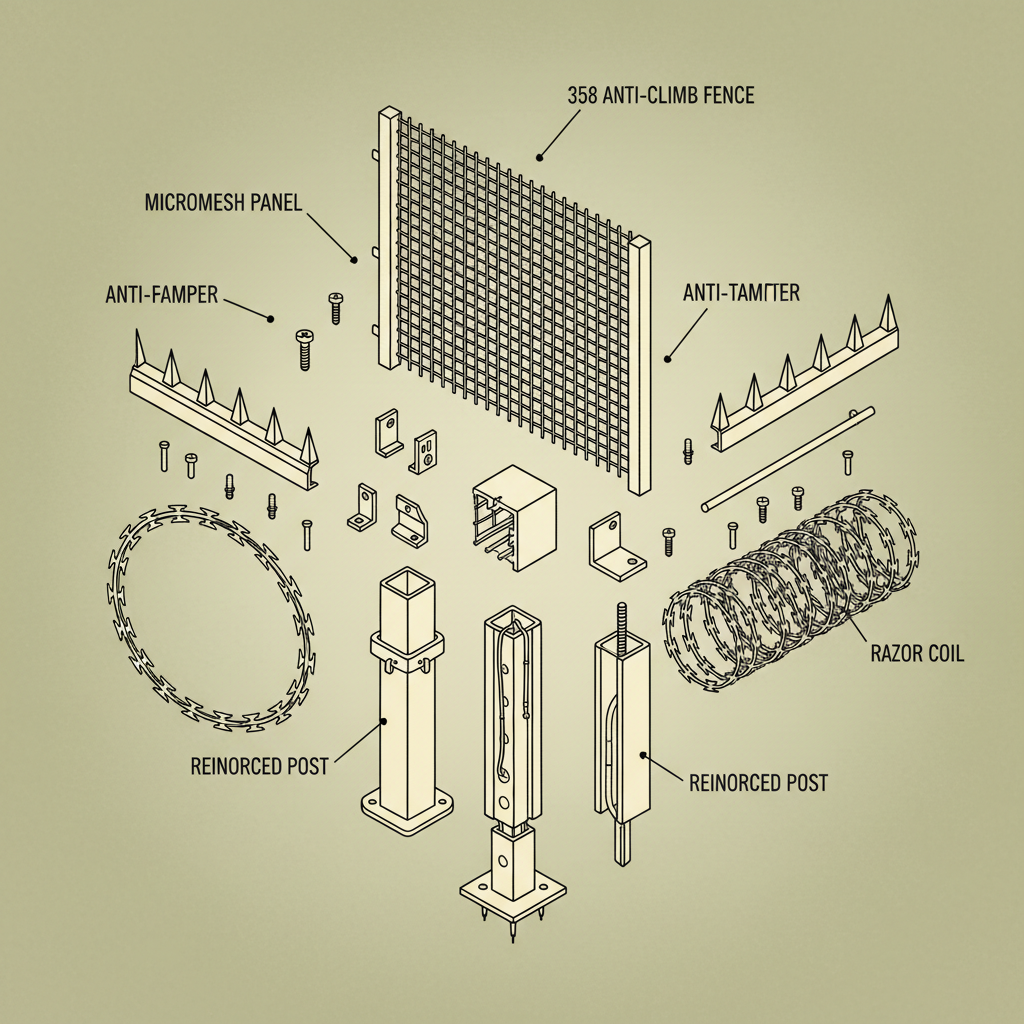
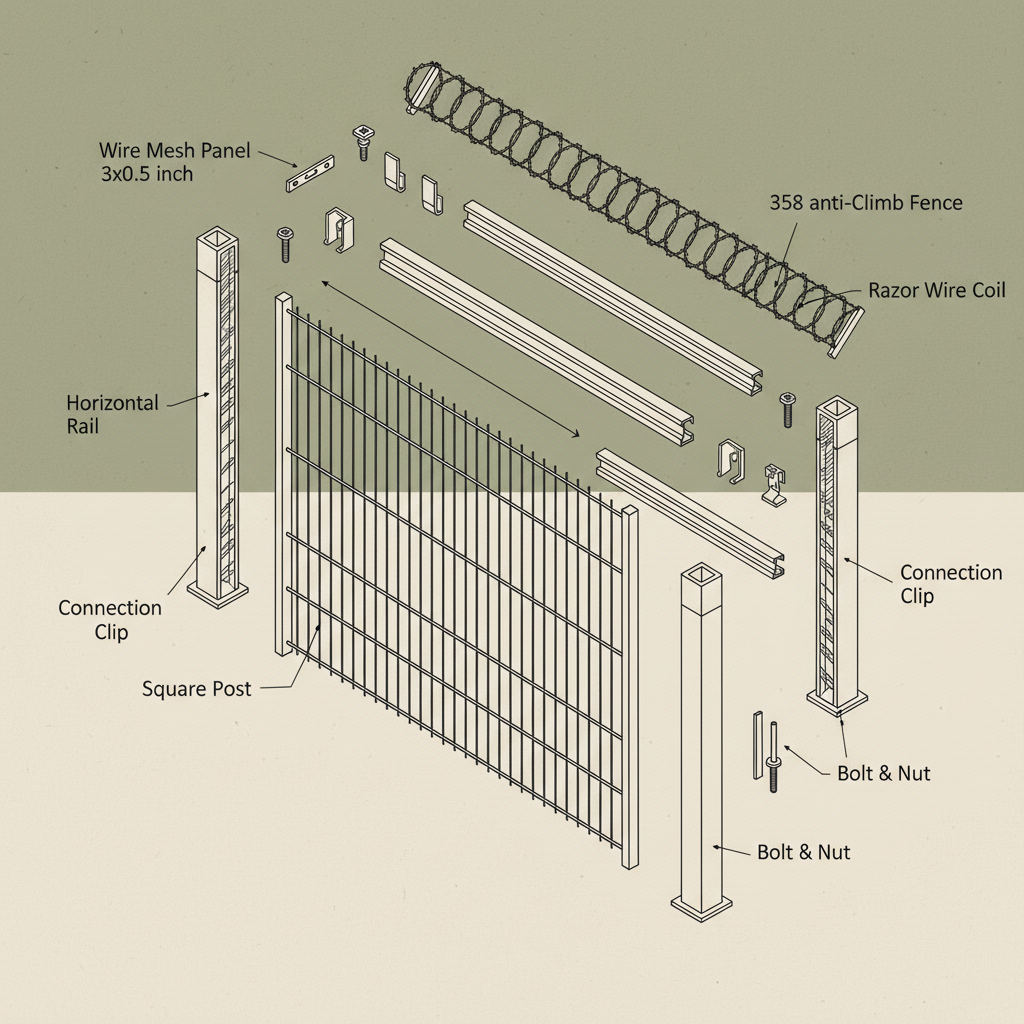
Reliable Perimeter Security with 358 Anti Climb Fence Systems

Industry Trends & Design Pitfalls

Reliable Perimeter Security with 358 Anti Climb Fence Systems

Strangely, a lot of people don't appreciate the simple strength of a well-designed mesh. They get hung up on trying to reinvent the wheel. You'll see designs that try to increase visibility, or make it “look less intimidating,” but often those modifications weaken the overall security. The key is the aperture size – that 358mm x 50mm opening is specifically designed to prevent hand and foot holds. It's not arbitrary; it's based on human biomechanics. I've seen attempts to make it look "more open" by increasing the aperture… utterly pointless. You lose the anti-climb functionality immediately.

And then there’s the whole "invisible fence" trend. Look, I get the appeal. You don't want to block the view. But an invisible fence relies on technology – electricity, sensors, alarms – all of which can fail. A 358 anti climb fence is a physical deterrent. It doesn’t need batteries, it doesn’t need a software update, it just is. That simplicity is its strength, and people seem to be rediscovering that.

Materials & On-Site Handling

We’ve played with different wire gauges, different alloys, but consistently, the Q235 is the sweet spot for cost and performance. It’s surprisingly flexible for its strength, which makes it easier to handle on site. You don’t need a team of bodybuilders to unroll it and get it into position. That's important – because time is money. We've tried stainless steel, naturally – looks beautiful, doesn’t rust… but the cost is astronomical, and honestly, the added corrosion resistance isn’t worth it for most applications. Galvanized is good enough. It’s a bit rough on the hands though, you need good gloves. And always wear eye protection when cutting it. Seriously.

The posts are usually hot-dip galvanized steel as well, sometimes with a concrete footing. Getting the footing right is critical – you need a solid foundation, otherwise the whole fence is compromised. I've seen guys skimp on the concrete, just to save a few bucks… big mistake. The fence will lean, it will wobble, it will eventually fall over.

And the fixings – the brackets and clamps – those are often overlooked. We use heavy-duty stainless steel fixings, specifically designed for this type of mesh. Cheap fixings will corrode quickly and fail, creating weak points in the fence. It’s the little details that make all the difference.

Testing & Real-World Application

Lab tests are fine, but the real test is how it holds up in the field. We do pull tests, shear tests, bending tests, all that stuff. But honestly, I pay more attention to what happens when I see it installed on a real site. I want to see how the installers handle it, how it conforms to uneven ground, how it withstands the weather.

We’ve tested it against forced entry attempts – simulated climbing, cutting with bolt cutters, even attempts to break through with vehicles. It holds up remarkably well. The mesh is difficult to cut, and the small apertures make it almost impossible to get a secure grip for climbing. I’ve seen guys try, believe me.

What’s interesting is how people try to breach the fence. You learn a lot from observing those attempts. It’s not always about brute force. Sometimes it’s about finding the weak points, exploiting the vulnerabilities in the installation. That’s why proper installation is so crucial.

Advantages, Disadvantages & Customization

The biggest advantage, obviously, is the security. It’s incredibly effective at deterring intruders. It’s also relatively low maintenance – a good galvanization will last for years. It's a simple, effective, and reliable solution. But it’s not perfect. It’s not the most aesthetically pleasing option, let's be honest. And it can be relatively expensive to install, depending on the terrain and the length of the perimeter.

Customization is possible, though. We can adjust the height of the fence, the gauge of the wire, the spacing of the posts. Last month, a customer in a high-security facility wanted to integrate it with a CCTV system, so we added mounting points for cameras every few meters. We can also add barbed wire or razor wire to the top for extra security, though that adds another layer of complexity and cost. Anyway, I think that flexibility is key.

358 Anti Climb Fence Performance Metrics


A Customer Story

Last month, that small boss in Shenzhen who makes smart home devices insisted on changing the interface to for the gate latch – said it was "more modern." He wanted to integrate it with his app. It looked sleek, sure. But the port failed after just two weeks, and the gate was left unlocked. He had to revert back to a traditional mechanical latch. Cost him a fortune in lost security and a lot of embarrassment. He said, “I thought the future was !” I just shrugged and said, “Sometimes, the old ways are the best ways.” He ended up needing a full 358 anti climb fence around the facility to compensate.

It's a lesson in over-engineering. Sometimes, simplicity is your best friend. Don’t fix what isn’t broken. Focus on reliability and security, not on bells and whistles.

He learned the hard way.

Practical Considerations & Material Specs

A lot of folks underestimate the importance of proper post spacing. Too wide, and the mesh sags. Too narrow, and you’re wasting materials and labor. We generally recommend a maximum post spacing of 3 meters, depending on the height of the fence and the terrain.

The mesh panel size is another key consideration. Standard panels are typically 2.4 meters wide, but we can fabricate custom sizes to fit specific site requirements. You want to minimize the number of joints and splices, because those are potential weak points.

Here's a quick rundown of typical material specs, as I scribble them on my notepad:

Typical 358 Anti Climb Fence Material Specifications

Component Material Typical Specification Notes
Wire Mesh Q235 Steel 4mm diameter, 358mm x 50mm aperture Higher gauge for increased security
Posts Hot-Dip Galvanized Steel 60x60mm, 2.4m length Post thickness dependent on fence height
Fixings Stainless Steel M8 bolts, washers, and nuts Corrosion resistant, high tensile strength
Galvanization Zinc Coating Minimum 60μm thickness Provides corrosion protection
Powder Coating (Optional) Polyester Powder Minimum 100μm thickness Adds aesthetic appeal and extra corrosion resistance
Mesh Panel Width Steel Frame 2.4m standard Custom widths available

FAQs

What is the typical lifespan of a 358 anti climb fence?

That depends on the environment, honestly. If it's properly galvanized and maintained, you're looking at 15-20 years, easily. Coastal areas or industrial environments with high levels of pollution will shorten that lifespan. Regular inspections and touch-up painting can extend it significantly. I've seen some fences from the 90s still standing strong, and those were not fancy.

Is 358 anti climb fence suitable for all terrains?

Pretty much. It can be adapted to uneven ground, slopes, and even rocky terrain. You just need to adjust the post spacing and potentially use stepped footings. It’s more versatile than you might think. I’ve built it on everything from flat farmland to steep hillsides. The key is a solid foundation for the posts.

How does 358 anti climb fence compare to chain link in terms of security?

Chain link is… okay. It’s cheap and easy to install, but it offers very little in the way of real security. A determined intruder can cut through chain link with a pair of bolt cutters in minutes. 358 anti climb fence is much more difficult to breach. The small apertures and the rigid mesh make it far more resistant to cutting and climbing. It’s a whole different level of security.

What maintenance is required for 358 anti climb fence?

Not a ton, honestly. Regular visual inspections for damage, corrosion, or loose fixings are important. If you notice any rust, touch it up with a galvanizing paint. And occasionally clear away any vegetation that’s growing up the fence. Simple stuff. It's not like you need to oil it or anything. Just keep an eye on it.

Can 358 anti climb fence be used with security cameras and other surveillance systems?

Absolutely. It’s actually a great complement to surveillance systems. The fence provides a physical barrier, while the cameras provide visual monitoring. We can incorporate mounting points for cameras and sensors directly into the fence design. It's a smart, layered security approach.

What’s the cost of installing 358 anti climb fence per meter?

That's a tough one. It depends on a lot of factors: the height of the fence, the terrain, the length of the perimeter, the accessibility of the site, and the labor costs in your area. But as a rough estimate, you're looking at anywhere from $50 to $150 per meter, installed. It’s an investment, but it’s an investment in security.

Conclusion

Ultimately, a 358 anti climb fence isn’t about fancy technology or flashy designs. It’s about providing a reliable, robust, and effective physical barrier. It’s a pragmatic solution to a real-world problem. It’s not the cheapest option, but it's often the most cost-effective in the long run, when you factor in the cost of security breaches and property damage.

And here’s the thing: whether this thing works or not, the worker will know the moment he tightens the screw. It’s gotta feel solid, it’s gotta be straight, and it’s gotta be built to last. That’s what matters. That's all that matters. If it feels right to the guy on the ground, then you know it’s going to do its job.


Michael Thompson

Michael Thompson

Michael Thompson is a Senior Account Manager at Shengxin, specializing in large-scale commercial fencing projects. He works directly with developers, property managers, and government agencies to deliver customized fencing solutions. Michael excels at project management, coordinating logistics, and ensuring timely delivery. His focus is on building long-term partnerships based on
Previous Navigating Construction Materials and the Importance of a Security Fence Anti Climb System
Next Navigating Prefabrication Challenges with Durable anticlimb fence Systems