Selecting the right boundary system often comes down to a critical trade-off between permeability and security. For commercial and industrial properties, the challenge is finding a solution that provides a rigid physical deterrent without completely obstructing visibility or airflow.
The shift toward modular metal systems has transformed how developers approach site security. Unlike traditional masonry or basic wooden partitions, modern engineered panels allow for rapid deployment and scalability, which is essential for projects ranging from railway protection to high-security residential estates.
When evaluating a high quality fence panels outdoor company, the focus should move beyond simple aesthetics to the structural integrity of the components, specifically the interaction between the panel mesh and the supporting posts.


The effectiveness of any outdoor fencing system is predicated on the relationship between the panel's tensile strength and the post's rigidity. In the metal products industry, this involves a precise balance of wire gauge and weld integrity to ensure the structure does not warp under wind loads or external pressure.
For professional installations, the transition from traditional chain link to 3D wire or double wire systems represents a move toward higher rigidity and lower maintenance. These systems utilize pre-fabricated panels that maintain their shape far better than woven alternatives over decades of exposure.
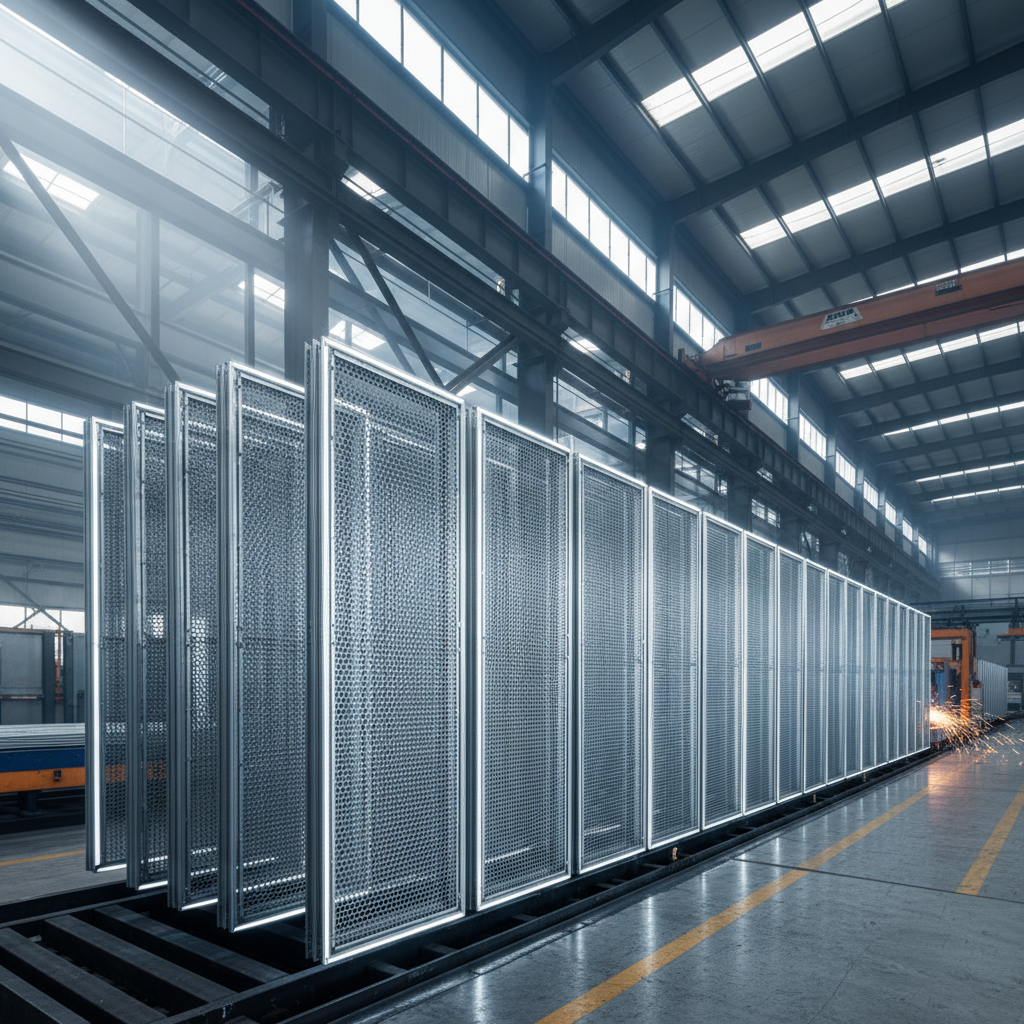
Stability in metal fencing is achieved through a combination of material chemistry and mechanical design. Galvanized steel serves as the industry standard due to its ability to resist oxidation, but the "quality" of a panel is often determined by the thickness of the zinc coating and the precision of the automated welding process used to join the horizontal and vertical wires.
3D wire fences, for example, incorporate V-shaped bends in the horizontal wires. This is not an aesthetic choice but an engineering one; these bends act as structural ribs that increase the stiffness of the panel against bending forces, allowing for wider spans between posts without sacrificing the overall integrity of the perimeter.
Furthermore, the choice between PVC coating and powder coating impacts both the lifespan and the environmental adaptability of the system. While powder coating provides a hard, durable finish, PVC offers a thick, plasticized layer that is often preferred in highly corrosive saline environments, such as coastal fish farms.
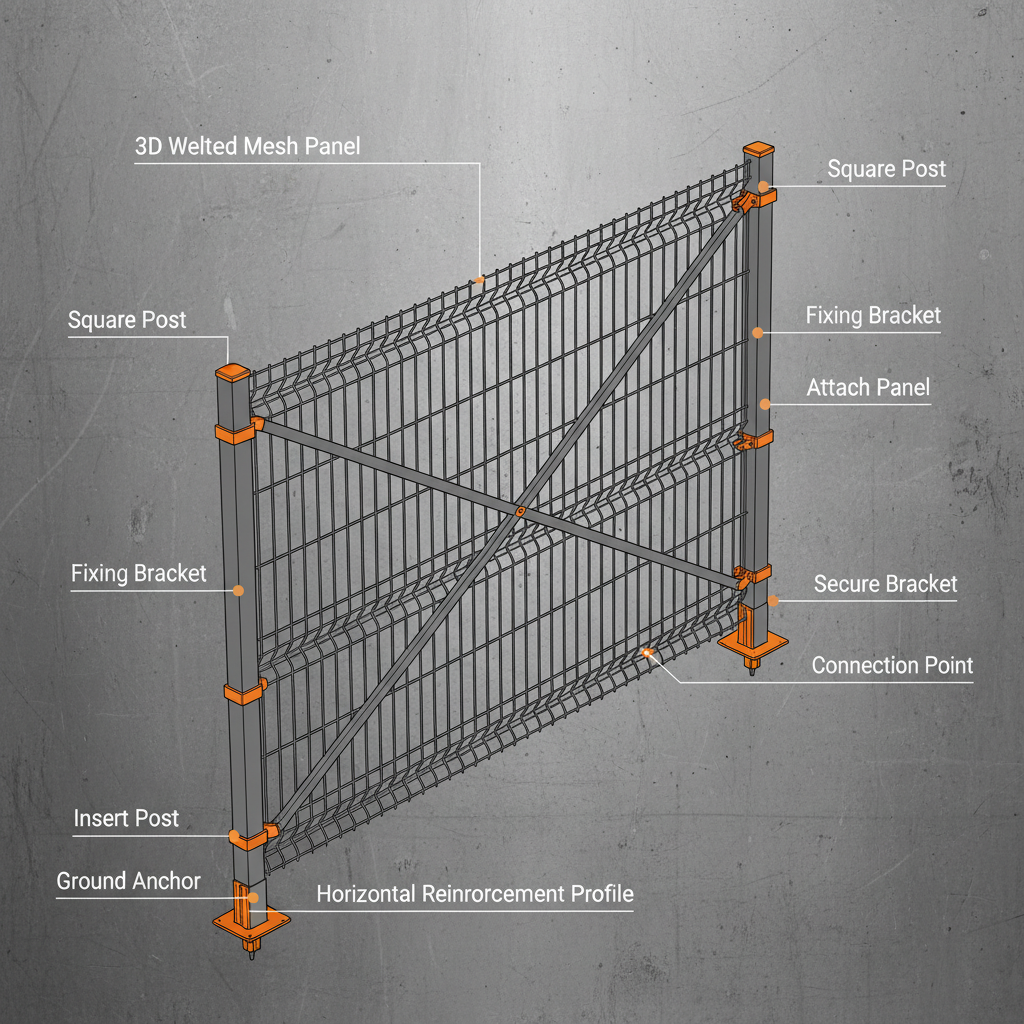
The fence panel is only as strong as the foundation that supports it. Square posts have become the preferred choice for high-security applications because they offer superior torsional resistance compared to round pipes, ensuring that the panels remain perfectly vertical even under significant lateral stress.
The integration of precision-engineered square posts serves as the critical anchor for the entire system, transforming a series of individual panels into a monolithic security barrier capable of withstanding environmental fatigue.
Shengxin Fence utilizes advanced welding technology and a 270-meter powder coating line to ensure these posts are not only structurally sound but chemically protected. By focusing on the consistency of the post dimensions, the installation process is streamlined, reducing the margin of error during site deployment.
When assessing different fencing categories, engineers typically use a relative index to compare stability, security levels, and installation speed. For instance, a 358 Anti Climb Fence is prioritized for high-security zones due to its extremely small apertures, while a temporary fence is evaluated based on its rapid deployability and portability.
Understanding these trade-offs allows project managers to allocate budgets effectively. A garden product requires different specifications—primarily aesthetic and basic boundary definition—compared to an expressway protective fence which must withstand high-velocity wind gusts and debris impact.
The practical application of metal fencing varies wildly based on the objective. For protective wire mesh on expressways and railways, the primary requirement is high impact resistance and a lack of climbable footholds. In contrast, security fencing for beach farming or salt farms requires extreme corrosion resistance due to constant salt spray, making hot-dip galvanization and PVC coating non-negotiable.
In residential and garden settings, the focus shifts toward a balance of boundary definition and visual appeal. Here, 3D wire fences are often chosen for their clean lines and ability to be customized in various colors to match the architectural style of the property, proving that industrial-grade durability can coexist with aesthetic requirements.
Security fencing has evolved from simple obstacles to engineered deterrents. The 358 Anti Climb Fence is a prime example; the "358" refers to the mesh dimensions (3" x 0.5" x 8 gauge), which are specifically designed to be too small for finger or toe grips and too narrow for most cutting tools to gain leverage.
Modern manufacturing has enabled the mass production of these high-density panels without sacrificing the ease of installation. By utilizing standardized accessories and precision-cut posts, the time required to secure a large-scale industrial site has been reduced significantly, lowering overall project costs.
As urban security needs change, we are seeing a trend toward "invisible" security—fences that provide maximum protection while maintaining a minimal visual profile. This is driving the development of higher-tensile wires that allow for thinner gauges without compromising the strength of the panel.
Choosing the correct system requires a systematic evaluation of the site's risk profile and environmental conditions. A common mistake is selecting a panel based on cost alone, neglecting the long-term maintenance costs associated with inferior coatings or insufficient post-depth.
Decision-makers should weigh the relative suitability of different mesh types against their specific needs. For example, while a chain link fence is cost-effective for large agricultural areas, it lacks the rigidity required for high-traffic public spaces or high-security industrial zones.
The following framework illustrates how different fencing solutions align with various operational requirements, providing a clear path for selection based on the primary objective of the installation.
| Fence Type | Primary Objective | Environmental Resistance | Relative Installation Speed |
|---|---|---|---|
| 358 Anti-Climb | High Security | High (Galvanized) | Moderate |
| 3D Wire Fence | General Boundary | High (PVC/Powder) | Fast |
| Chain Link | Large Area/Cost | Moderate | Moderate |
| Double Wire | Rigid Perimeter | High (Galvanized) | Fast |
| Temporary Fence | Short-term Access | Moderate | Very Fast |
| BRC Fence | Industrial Strength | High (Galvanized) | Moderate |
Quality is determined by three primary factors: material grade, coating thickness, and weld precision. High-quality panels use high-tensile steel with a consistent galvanization layer (zinc coating) that prevents rust. Additionally, the welding points must be seamless and fully penetrated to prevent the panel from separating under stress. The use of automated production lines, such as the ones used by Shengxin Fence, ensures that every panel meets strict dimensional tolerances, which is critical for a secure and aligned installation.
Powder coating is a dry finishing process that creates a hard, thin, and highly aesthetic skin, ideal for urban and residential areas where appearance is key. PVC coating involves dipping the metal into a liquid plastic, creating a thicker, more flexible layer. PVC is superior for extreme environments, such as salt farms, beach farming, or high-humidity areas, as it provides a more robust waterproof barrier against corrosive agents. The choice depends on whether you prioritize a sleek finish or maximum environmental protection.
Square posts provide significantly better structural stability, particularly regarding torsional (twisting) resistance. When a panel is pushed or pulled, a square profile distributes the stress more evenly across its surface area and offers a flatter mounting surface for brackets and clamps. This results in a more rigid connection between the post and the panel, reducing the likelihood of the fence leaning or sagging over time, especially in high-wind areas or high-security zones.
The 358 Anti Climb Fence is specifically engineered as a high-security deterrent. Its naming convention describes its design: 3" x 0.5" apertures with 8-gauge wire. The extremely small gaps make it nearly impossible for an intruder to get a finger-hold or toe-hold to climb the fence. Additionally, the tight mesh makes it very difficult to use standard bolt cutters, as there is limited space to position the tool. This makes it the ideal choice for critical infrastructure and high-risk boundaries.
Generally, yes. Modular panels are manufactured in controlled factory environments with automated precision, which lowers the per-unit cost compared to on-site fabrication. More importantly, they significantly reduce labor costs because they can be installed rapidly using standardized accessories. While custom fences may offer a precise fit for irregular terrain, the efficiency, quality control, and speed of installation provided by a professional outdoor fence panels company usually result in a lower total cost of ownership.
The lifespan varies based on the coating. Standard hot-dip galvanizing can last 15-25 years in moderate environments, but in coastal areas, salt-induced corrosion can reduce this significantly. However, when combined with a secondary PVC coating, the lifespan is extended because the plastic layer shields the zinc from direct salt exposure. Regular inspection of the coating integrity is recommended to ensure that any scratches are repaired, preventing localized oxidation from spreading through the panel.
Securing a property requires a move away from generic solutions toward engineered systems that address the specific risks of the environment. Whether the goal is preventing unauthorized access via anti-climb technology or ensuring long-term durability in corrosive coastal zones, the synergy between high-grade mesh panels and rigid support posts remains the definitive factor in system performance.
By focusing on technical specifications—such as zinc coating thickness, post geometry, and weld integrity—buyers can ensure their investment provides reliable protection for decades. Partnering with an experienced manufacturer ensures that these technical requirements are met through standardized production and rigorous quality control.